
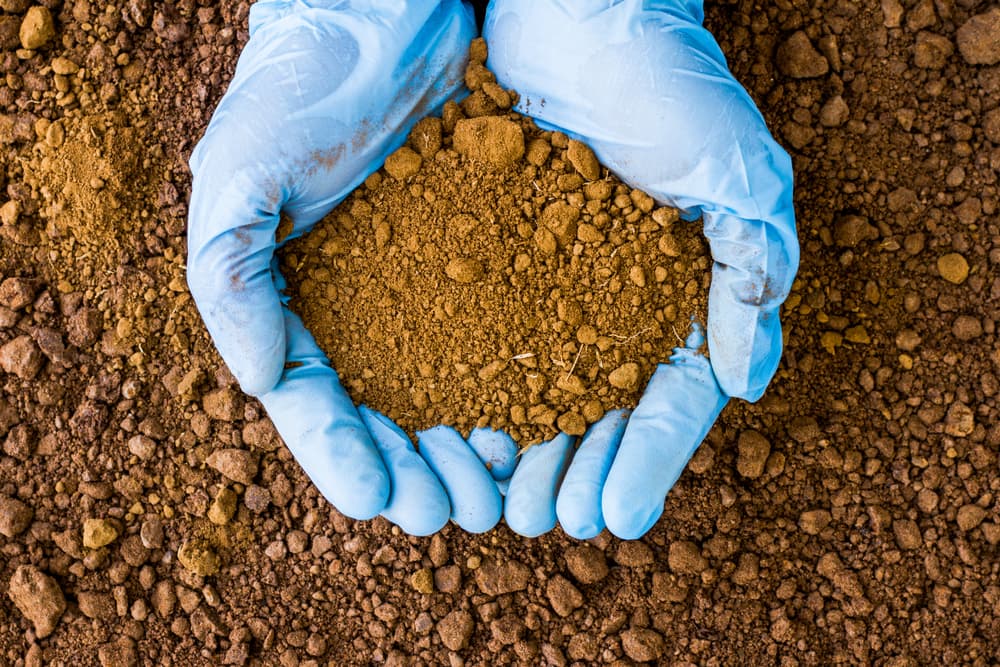
Soil contamination testing has become a critical requirement for construction projects, property transactions, and environmental compliance in 2025. With EPA regulations tightening and liability concerns growing, understanding how to properly test for soil contamination can save you thousands in cleanup costs and legal issues. Whether you're a contractor preparing a site or a property owner conducting due diligence, this comprehensive guide covers everything you need to know about soil contamination testing protocols, costs, and regulatory requirements.
Understanding Soil Contamination and When Testing is Required
Soil contamination occurs when hazardous substances are present in soil at concentrations that pose risks to human health or the environment. Under EPA's Resource Conservation and Recovery Act (RCRA) and various state Department of Environmental Quality (DEQ) regulations, soil testing is mandatory in specific situations.
Common Soil Contaminants
The most frequently encountered soil contaminants include:
- Petroleum products: gasoline, diesel, motor oil from underground storage tanks
- Heavy metals: lead, mercury, arsenic, chromium from industrial activities
- Volatile organic compounds (VOCs): solvents, degreasers, dry cleaning chemicals
- Polycyclic aromatic hydrocarbons (PAHs): coal tar, creosote, asphalt
- Pesticides and herbicides: particularly on agricultural properties
- Asbestos: from building materials and industrial operations
When Soil Testing is Mandatory
Federal and state regulations require soil contamination testing in these scenarios:
- Property transactions involving commercial or industrial sites (Phase I/II Environmental Site Assessments)
- Construction projects on previously developed land
- Sites within 1,000 feet of known contamination sources
- Properties with underground storage tanks (current or historical)
- Agricultural land conversion to residential use
- Any excavation generating more than 1,000 cubic yards of soil for off-site disposal
Types of Soil Contamination Testing Methods
Professional soil contamination testing involves several methodologies, each suited to different contamination types and project requirements. Understanding these methods helps ensure you choose the right approach and avoid costly re-testing.
Field Screening vs Laboratory Analysis
Field screening provides rapid, on-site results using portable instruments like photoionization detectors (PIDs) and X-ray fluorescence (XRF) analyzers. Costs range from $150-300 per day for equipment rental plus technician fees of $75-125 per hour. While faster and cheaper, field screening only provides preliminary data.
Laboratory analysis offers definitive results with detection limits as low as 1 part per billion. EPA Method 8260 for VOCs and Method 6010 for metals are industry standards. Laboratory testing costs $200-800 per sample depending on the analyte package and turnaround time.
Standard Testing Packages
| Package Type | Contaminants Tested | Cost Per Sample | Typical Use |
|---|---|---|---|
| Basic Screening | TPH, BTEX, Lead | $250-400 | Fuel contamination sites |
| Full Metals Suite | 8 RCRA metals, additional heavy metals | $300-500 | Industrial/mining areas |
| VOC Analysis | Method 8260 - 85+ compounds | $400-600 | Dry cleaners, manufacturing |
| Agricultural Screen | Pesticides, herbicides, nutrients | $450-750 | Former farmland |
| Comprehensive | All above categories | $800-1,200 | Unknown contamination history |
Specialized Testing Requirements
Certain projects require specialized testing protocols:
- TCLP testing: Required for soil disposal characterization, costs $150-250 per sample
- California WET testing: Mandatory in California, replaces TCLP with more stringent limits
- Asbestos in soil: Requires EPA Method 600/R-93-116, costs $300-500 per sample
- PCB analysis: EPA Method 8082, required near electrical facilities, $400-600 per sample
Professional Soil Sampling Procedures and Grid Patterns
Proper sampling technique is crucial for accurate contamination assessment. Poor sampling methods can lead to false negatives, regulatory violations, and expensive remediation surprises during construction.
Sampling Grid Design
EPA guidance recommends systematic grid sampling for contamination delineation. Grid spacing varies by site size and suspected contamination:
- Initial assessment: 50-foot grid spacing for sites under 1 acre
- Large sites: 100-foot grid with 25-foot confirmation sampling
- Hot spot delineation: 10-25 foot grids around known contamination
- Background samples: Minimum 10% of total samples from upwind/upgradient areas
Sample Collection Protocol
Professional sampling follows strict chain-of-custody procedures:
- Surface preparation: Remove debris, vegetation, and top 2 inches of weathered soil
- Sampling depth: Typically 0-2 feet for surface contamination, deeper for subsurface plumes
- Sample volume: Minimum 4 ounces for most analyses, 8 ounces for comprehensive testing
- Container selection: Glass vials for VOCs, plastic containers for metals and semi-volatiles
- Preservation: VOC samples require 4°C storage and 14-day holding times
Quality Control Measures
Professional sampling programs include quality control samples representing 10% of total sample volume:
- Duplicate samples: Verify laboratory precision and sampling consistency
- Equipment blanks: Ensure cross-contamination prevention between sample locations
- Trip blanks: Monitor VOC sample integrity during transport
EPA Standards and State Regulatory Requirements
Soil contamination standards vary significantly between federal and state programs, with some states maintaining more stringent limits than EPA guidelines. Understanding applicable standards prevents costly over-cleanup while ensuring regulatory compliance.
Federal Standards and Guidelines
EPA establishes contamination thresholds through several programs:
- RCRA Action Levels: Trigger further investigation when exceeded
- Superfund Preliminary Remediation Goals (PRGs): Risk-based screening levels
- Regional Screening Levels (RSLs): Updated annually, vary by land use
For residential land use, common EPA screening levels include:
- Lead: 400 mg/kg (parts per million)
- Arsenic: 0.68 mg/kg
- Benzene: 1.4 mg/kg
- Total petroleum hydrocarbons: 100-500 mg/kg (state dependent)
State-Specific Requirements
Many states maintain independent contamination standards:
California: Uses Environmental Screening Levels (ESLs) often more stringent than federal standards. Requires California WET testing for disposal characterization.
New Jersey: Maintains Industrial Site Recovery Act (ISRA) requirements and Site Remediation Reform Act standards. Lead action level: 400 mg/kg residential, 1,000 mg/kg industrial.
Texas: Texas Risk Reduction Program (TRRP) uses site-specific risk assessment. Allows higher contamination levels with institutional controls.
Florida: Chapter 62-777 Florida Administrative Code establishes Soil Cleanup Target Levels (SCTLs) and Groundwater Cleanup Target Levels (GCTLs).
Local Municipal Requirements
Many municipalities impose additional testing requirements:
- Building permit applications may require soil testing certificates
- Zoning changes often trigger Phase I/II environmental assessments
- Public works projects typically require clean fill certifications
- School and park construction mandates comprehensive contamination screening
Soil Contamination Testing Costs and Timeline
Soil contamination testing costs vary significantly by geographic region, laboratory selection, and analytical requirements. Understanding cost structures helps budget appropriately and avoid surprise expenses.
Laboratory Analysis Costs
Regional cost variations reflect local competition and transportation expenses:
Northeast (NY, NJ, MA): Premium pricing due to strict regulations and high demand
- Basic petroleum screening: $300-450 per sample
- Full metals analysis: $400-600 per sample
- VOC analysis: $500-750 per sample
Southeast (FL, GA, NC): Moderate pricing with good laboratory competition
- Basic petroleum screening: $250-375 per sample
- Full metals analysis: $350-525 per sample
- VOC analysis: $425-625 per sample
Midwest/Central (TX, OK, CO): Lowest costs due to oil and gas industry infrastructure
- Basic petroleum screening: $200-325 per sample
- Full metals analysis: $275-450 per sample
- VOC analysis: $375-575 per sample
West Coast (CA, WA, OR): High costs due to stringent regulations and limited laboratory capacity
- Basic petroleum screening: $325-475 per sample
- Full metals analysis: $425-650 per sample
- VOC analysis: $525-775 per sample
Professional Services Costs
Environmental consulting firms charge for sampling and reporting services:
- Site reconnaissance: $150-250 per hour
- Sample collection: $75-125 per sample location
- Report preparation: $1,500-3,500 for basic projects
- Regulatory consultation: $175-275 per hour
Testing Timeline Expectations
Standard turnaround times for soil contamination testing:
- Sample collection: 1-3 days depending on site access and grid complexity
- Laboratory analysis: 5-10 business days standard, 2-3 days rush (additional 50-100% cost)
- Report preparation: 3-7 business days after receiving laboratory results
- Total project time: 2-4 weeks for routine projects
Interpreting Test Results and Next Steps
Understanding soil contamination test results requires knowledge of regulatory standards, statistical analysis, and potential remediation options. Misinterpreting results can lead to unnecessary cleanup costs or regulatory violations.
Reading Laboratory Reports
Professional laboratory reports include several critical components:
- Analytical results: Contaminant concentrations in mg/kg (milligrams per kilogram) or ppm (parts per million)
- Detection limits: Minimum concentration the laboratory can reliably measure
- Quality control data: Blank results, duplicate precision, spike recoveries
- Regulatory comparisons: Results compared to applicable federal and state standards
Statistical Evaluation
EPA guidance recommends statistical evaluation for datasets with 10 or more samples:
- 95% Upper Confidence Limit (UCL): Conservative estimate of average contamination
- Maximum detected concentration: Highest individual sample result
- Frequency of detection: Percentage of samples exceeding detection limits
Remediation Decision Matrix
When contamination exceeds regulatory standards, several options exist:
| Contamination Level | Typical Response | Cost Range | Timeline |
|---|---|---|---|
| Slightly above standards | Confirmatory sampling | $2,000-5,000 | 2-3 weeks |
| Moderately contaminated | Excavation and disposal | $50-150 per cubic yard | 1-4 weeks |
| Heavily contaminated | Treatment or specialty disposal | $200-800 per cubic yard | 1-6 months |
| Groundwater impact | Remedial investigation | $25,000-100,000+ | 6-18 months |
Clean Fill Certification
When soil meets clean standards, obtaining proper documentation enables beneficial reuse:
- Clean fill certificates: Required for most construction projects
- Beneficial reuse permits: Allow soil placement at other sites
- Chain of custody documentation: Tracks soil from source to destination
Key Takeaways and Best Practices
Successful soil contamination testing requires careful planning, proper execution, and thorough documentation. These industry best practices minimize risks and ensure regulatory compliance:
- Start early: Begin contamination assessment during initial site evaluation to avoid construction delays
- Understand local requirements: Research federal, state, and municipal standards before sampling
- Use qualified professionals: Licensed environmental consultants ensure proper sampling and regulatory compliance
- Budget appropriately: Include 15-25% contingency for additional testing or confirmatory sampling
- Document everything: Maintain complete chain-of-custody and photographic records
- Plan for contingencies: Develop response strategies for various contamination scenarios before testing begins
Remember that soil contamination testing is an investment in project success and environmental stewardship. Proper testing prevents costly surprises, ensures worker safety, and protects public health. When contamination is detected early, remediation options remain flexible and cost-effective.
Ready to Source Clean Fill Material?
Clean Fill Network connects you with verified suppliers of contamination-free soil and aggregates across North America.
Find Clean Fill Material Near You →